The power of social media is immense. So much more than a mere communication tool, it’s a cornerstone of citizen journalism and can be one of the most effective ways in which ordinary people can tell important stories as they happen. What’s more, content posted on social media can be the grounds for legal action and meaningful change, as a case concerning lockdown rights recently heard at the Western Cape High Court clearly showed.
The naked man
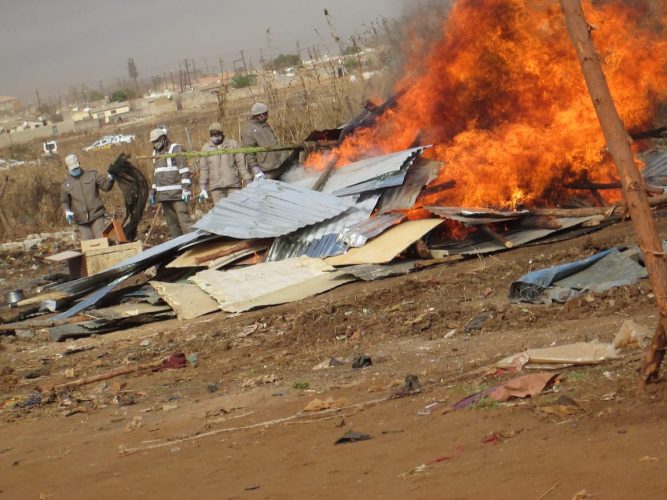
On 1 July 2020, a video of a naked man being dragged out of his shack in an informal settlement in Khayelitsha went viral on social media. The man concerned, Bulelani Qolani, was removed from his home by City of Cape Town officials who were members of the Anti-Land Invasion Unit (ALIU). They destroyed his home shortly afterwards.
The ALIU is a specialised unit tasked with deciding which structures should be demolished on land they claim has been invaded. This work is conducted without a court order and typically refers to homes in informal settlements, which means that it usually affects some of South Africa’s most vulnerable people.
The video caused an outcry. It reminded people of the brutal forced removals that took place during apartheid, and demands for the judicial oversight of evictions and demolitions during the national state of disaster were heard. The South African Human Rights Commission (SAHRC), a state institution that is mandated to promote respect for human rights, stepped forward in response.
Together with the Housing Assembly and Bulelani Qolani, the SAHRC brought a case against the City of Cape Town as well as the Minister of Human Settlements, the Minister of Co-operative Governance and Traditional Affairs, the National Commissioner of the South African Police, the Minister of Police and the Western Cape Provincial Commissioner of the SAPS.
Lockdown rights infringed – not an isolated incident
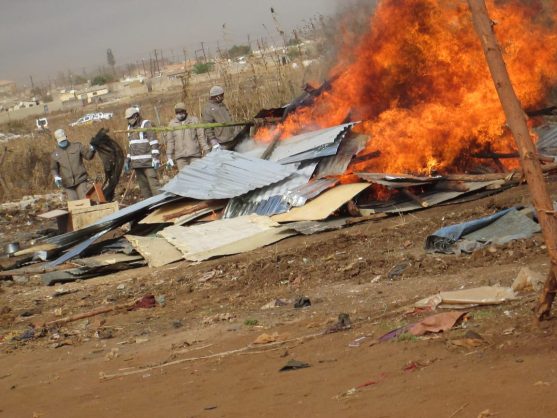
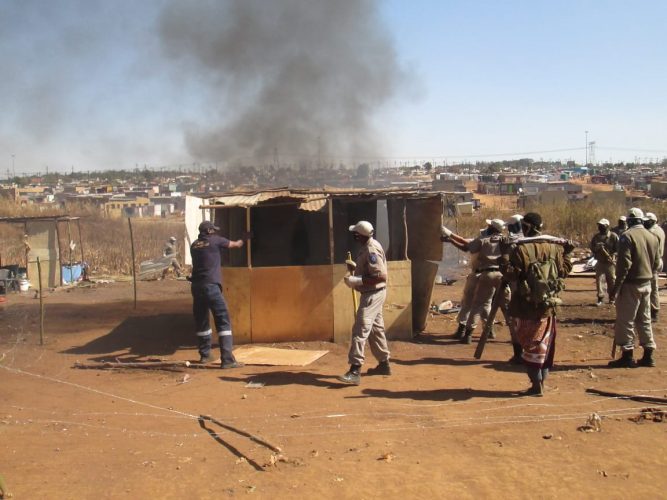
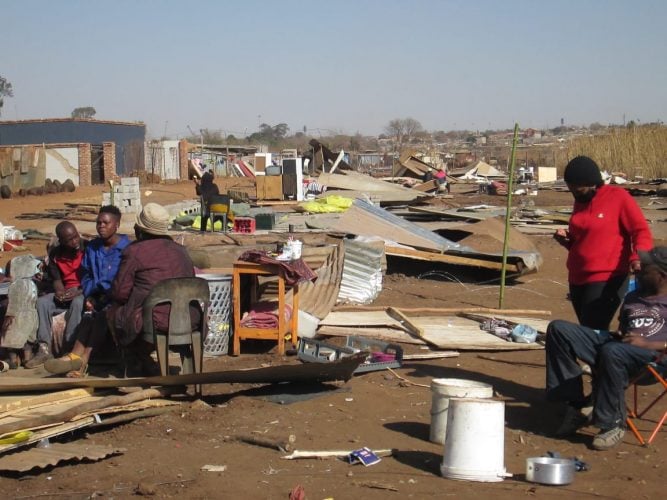
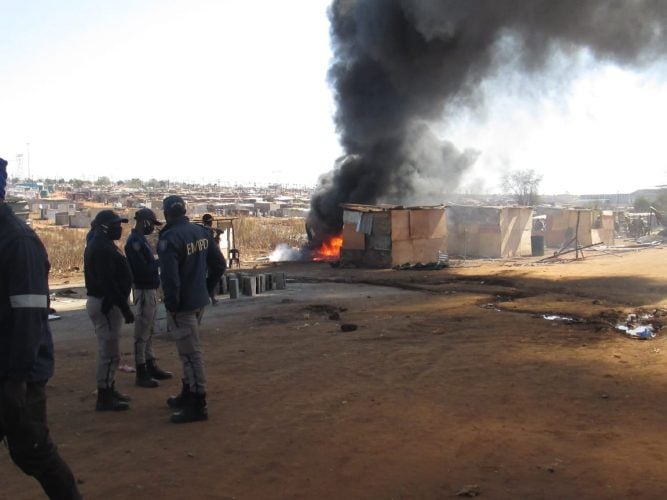
The incident that occurred in Khayelitsha on 1 July wasn’t the only one of its kind. In fact, there were several others that took place during alert levels 3 and 4, despite that fact that evictions were meant to be suspended until the last day of the alert level period.
Some of the demolitions and evictions that occurred were as follows:
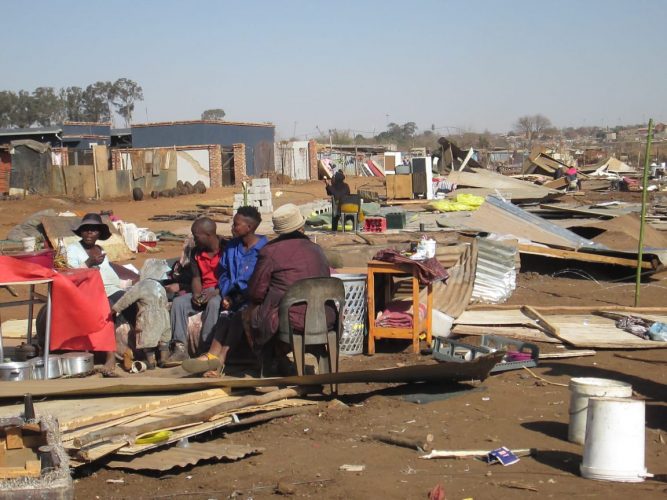
- On 9 to 11 April 2020 in Empolweni Informal Settlement in Makhaza, Khayelitsha, the ALIU demolished structures on land owned by the City. Urgent relief was given by the Western Cape High Court to a number of residents whose structures were demolished. On 17 April, the court granted an interim order, ordering the City to return building materials confiscated from Empolweni and authorising residents to re-erect and occupy structures there for as long as the lockdown continues.
- On 15 May 2020 in Ocean View, Kommetjie, evictions and demolitions took place on land that is privately owned by the Ocean View Development Trust. The City denied that evictions were conducted at the time, and said that ALIU had acted within its mandate to demolish illegally erected structures provided that they were unoccupied.
- On 29 June 2020 in Hangberg, Hout Bay, the SAHRC received a complaint alleging that City officials had demolished a structure. The Western Cape High Court declared the City’s conduct unlawful and unconstitutional and emphasised that home demolitions could not be carried out without a court order during alert levels 3 and 4.
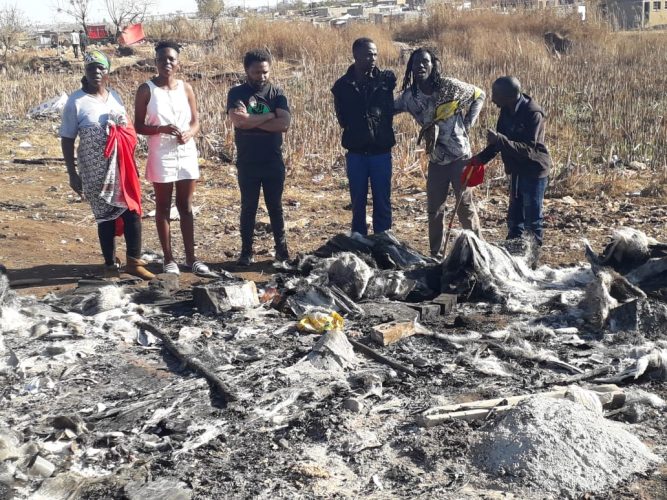
- On 13 July 2020 in Zwelethu, Mfuleni, structures on land owned by the Western Cape Nature Conservation Board in Mfuleni, which joins city-owned land, were demolished. Many of the area’s residents are desperately poor and unemployed and have been the subject of at least seven evictions carried out without a court order.
“Bleeding and in pain”
Of course, there was also the incident that received the most attention – the one that took place in Khayelitsha on 1 July. The official court papers refer to the affidavit that Bulelani Qolani gave, in which he states that while the law enforcement officers were approaching, he went inside his home and prepared to bathe:
“He stood outside his dwelling naked and asked to be allowed to finish his bath. The law enforcement officers sprayed his neighbour with pepper spray and forcibly gained entry into Mr Qolani’s dwelling, carrying batons and guns. On entering his structure, they were already pushing up the roof to tear it apart.
“He asked to be shown an eviction order and told them it was illegal to evict during the lockdown period. They ignored his requests, he said, handled him physically and violently, pepper sprayed him and forcefully removed him from his house, whilst still naked and in full view of residents. As Mr Qolani tried to re-enter his house, he states they shoved him to the ground and one official knelt on his back while another held him down to stop him moving.
“Eventually, after quite a struggle, Mr Qolani got back into his house and sat on his bed, his head bleeding and in pain. Whilst he was still inside, he states, the demolition was completed.”
A precedent-setting judgment
On 20 and 21 August 2020, the case between the SAHRC as the first applicant and the City of Cape Town as the first respondent was heard at the Western Cape High Court. And on 25 August 2020, judgment was delivered.
In their judgment, Judges Shehnaz Meer and Rosheni Allie declared that the City of Cape Town ALIU will not be allowed to evict people or demolish occupied or unoccupied structures without a court order while the country remains in a state of national disaster. This landmark ruling is binding in the Western Cape and may set a precedent for other provincial courts too.
What’s more, if any evictions or demolitions are conducted with a court order in place, these must be conducted “in a manner that is lawful and respects and upholds the dignity of the evicted persons”. City officials are expressly prohibited from using force, the judges decreed, and from destroying or confiscating any material on the property concerned.
SAPS members will now have to be present during evictions and demolitions to ensure they are done lawfully, in line with South Africa’s Constitution and “in accordance with the SAPS’ constitutional duty to protect the dignity of the persons evicted”. In addition, the City was interdicted and restrained from considering, adjudicating and awarding any bids or tenders received in response to a tender specifically focused on the demolition of illegal formal and informal structures in Cape Town.
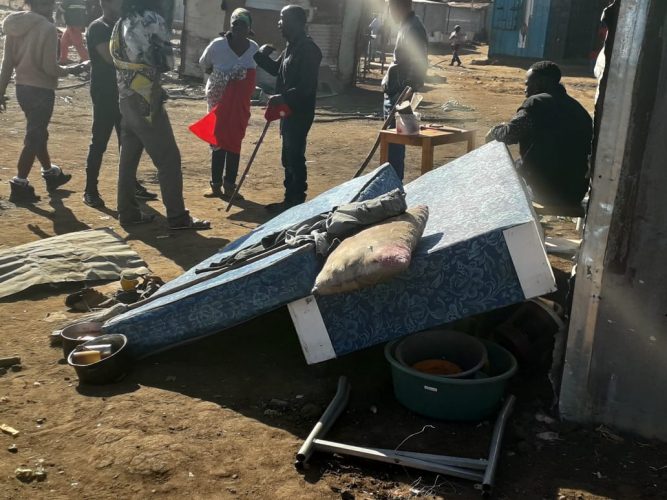
The court ordered the City to return all building material and personal possessions taken by the ALIU since 1 May, and to pay R2,000 to the people identified by the Economic Freedom Fighters.
But there’s more to come. In October, additional hearings will be held to determine whether demolitions or evictions can take place without a court order once the state of national disaster has ended. It’s likely that an important conversation has begun.
Contact us
Simon Dippenaar & Associates, Inc. is a firm of specialist eviction lawyers, based in Cape Town and now operating in Johannesburg and Durban, helping both landlords and tenants with the eviction process. Contact one of our eviction attorneys on 086 099 5146 or sdippenaar@sdlaw.co.za if you need advice on the eviction process or if you are facing unlawful eviction.
Reprinted from sdlaw.co.za