Hungry or evicted: Life for migrant women in Johannesburg’s ‘dark buildings’
By Eviction Lawyers South Africa | Electricity, Eviction news, EvictionsThe government declared evictions illegal during lockdown levels 5, 4 and 3. But what happens when the landlord is already operating outside the law? We were sad to read the story of these women in Johannesburg.
Reprinted from Dispatch Live. By Reuters and Kim Harrisberg – 2020-06-28

During the prolonged Covid-19 lockdown, refugee and migrant women living in Johannesburg are often faced with a choice between being able to feed their families or keep a roof over their heads.
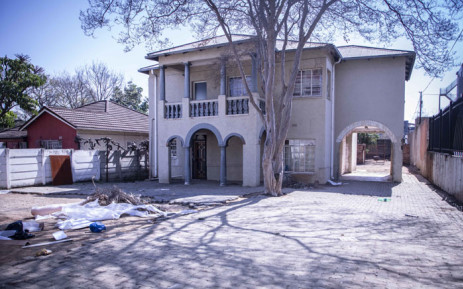
Image: SANDILE NDLOVE
When Cynthia fled Zimbabwe as a refugee, she dreamed of a safe, clean house in neighbouring South Africa where she could start a new life.
But seven years later she is one of hundreds of single Zimbabwean women living in Johannesburg’s notorious “dark buildings” — crowded but cheap accommodation in derelict properties that were illegally seized by rogue landlords.
Like many of the refugee and migrant women living there, she lost her job as a domestic worker during South Africa’s coronavirus lockdown, forcing her to choose between buying food or paying rent.
“The lockdown has been very painful for these women,” said Ethel Musonza, 50, who founded Zimbabwe Isolated Women in South Africa (ZIWISA), a group that connects the women over WhatsApp for help with food, rent and emotional support.
“Landlords want to evict them if they are unable to pay (rent),” she said, adjusting her facemask as she walked towards a dark building in the rundown Doornfontein suburb in Johannesburg, where a number of ZIWISA members are based.
“Sometimes only one child can eat and not another,” Musonza told the Thomson Reuters Foundation, adding that the group ZIWISA supports has doubled in size to 2,000 WhatsApp members in several provinces since lockdown began in March.
The municipal government of Johannesburg estimates that more than 1,470 properties in the city have been taken over by people pretending to be the rightful owners.
They rent out single rooms for about R600 a month to up to six tenants at once and cut off electricity when the room is not paid for, said Lucky Sindane, a spokesperson for the city’s anti-fraud and corruption unit.
Some buildings have no electricity at all, and this darkness combined with “experiences of misfortune” have inspired the name “dark buildings”, according to South African academic Matthew Wilhelm-Solomon.
Inside a small room shared with four other people, with a curtain as a door, Cynthia sat on her bed.
“I want to live a better life … in a place I feel safe,” said Cynthia, whose name has been changed to protect her identity.
“But until then I have ZIWISA, which supports us to stand strong during lockdown,” said the 32-year-old, adding that the organisation has helped her and others to leave abusive partners.
FOOD AID
In a basement parking lot in Doornfontein, Musonza was guiding a calm queue of women towards a table so they could tick off their names and collect their food parcels.
During lockdown, which the country began easing out of on June 1, Musonza has been working with South African charity Participate Empower Navigate (PEN) to co-ordinate food aid for hundreds of ZIWISA members living in illegal accommodation under lockdown.
Musonza herself moved to South Africa from Zimbabwe in 1998. Since then she has been a domestic worker and begged on Johannesburg’s streets.
Now she makes ends meet through selling food on the street, but most of her time is dedicated to volunteering full-time for ZIWISA, which she started in 2009.
The ZIWISA WhatsApp group, the main avenue of communication between the women, pings constantly in her pocket as members message her for assistance.
“Many of the women turn towards sex work out of desperation,” said Musonza, adding that by pooling their money the members have helped pay rent for 10 women in dark buildings and saved them from evictions during lockdown.
South Africa’s most recent census figures from 2011 show that more than 3% of the population is made up of “non-South African citizens”.
But estimates vary widely and researchers say it is difficult to collect reliable numbers.
Many of those living in Johannesburg’s inner city are from Zimbabwe, said Musonza, a country where aid groups warn millions face growing levels of hunger due to recurring drought, widespread floods, lost harvests and an economic crisis.
ZIWISA members are a mix of women who have managed to get work permits, others with refugee status and some who have crossed the border illegally, so they have no papers at all, said Musonza.
“I have felt stuck and lonely,” said Siyabonga (whose name was also changed), 48, a single mother-of-three standing in the food parcel queue in the basement parking lot.
During the lockdown, a friend added her to ZIWISA’s WhatsApp group to connect with other women in a similar situation, many who she says now call to check up on her every few days.
“ZIWISA has helped me find a counsellor, get food and feel like I have a home and a family,” she said, as she ticked off her name and collected her food parcel.
DARKNESS
Sheila, 30, lives in a room with her three children in one of Doornfontein’s dark buildings, where wires suspended from the ceilings hold makeshift curtain dividers so they can each have their privacy.
The entire building, which sometimes houses up to 700 people, shares a single toilet, so everyone queues in the morning to use it, she said.
Sheila, who asked not to use her real name, begs on the street for money and struggled to earn enough for rent during the lockdown, as the army patrolled the streets to make sure people stayed indoors.
Only able to pay part of her R600 rent, her electricity was cut off by her landlord during lockdown, plunging her into darkness.
“The hijackers of these buildings are the criminals,” said city spokesperson Sindane, adding that the corruption unit is currently researching hijacked properties.
“There are some criminals like drug dealers who live there, but many are just desperate, innocent people. It is a sad and complicated situation,” said Sindane, who works to return the properties to their original owners.
Sometimes the owners of the dark buildings have left the country, or they are in South Africa but unable or afraid to take back the properties from their illegal occupiers, he explained.
Sindane noted that tenants are only made to leave the property if the legal owner gets a court order for eviction.
“We try to encourage property owners to consider the people living in the building, to try to renovate the property and enter in a new lease agreement with current tenants,” he said.
This does not always happen, said Musonza, who has been evicted from four different dark buildings by owners with eviction orders. But despite the stigma of criminality and danger that they carry, “the dark buildings provide”, she said.
“It is cheap and better than living on the streets. It gives us shelter,” she added, as she walked through a dimly lit passageway in one of the buildings, checking her WhatsApp messages as her phone pinged relentlessly.
“I need to remind these women that despite where they live, they are strong.”
The Thomson Reuters Foundation is the charitable arm of Thomson Reuters, covering the lives of people around the world who struggle to live freely or fairly. Visit http://news.trust.org
*Simon Dippenaar & Associates, Inc. is a firm of specialist eviction lawyers, based in Cape Town and now operating in Johannesburg and Durban, helping both landlords and tenants with the eviction process. Contact one of our attorneys on 086 099 5146 or sdippenaar@sdlaw.co.za if you need advice on the eviction process or want to know the cost of eviction.