Category

COVID 19

Lockdown rights enforced for residents of informal settlements in Cape Town

By | COVID 19, Eviction law case summaries, Eviction news, Evictions

The power of social media is immense. So much more than a mere communication tool, it’s a cornerstone of citizen journalism and can be one of the most effective ways in which ordinary people can tell important stories as they happen. What’s more, content posted on social media can be the grounds for legal action and meaningful change, as a case concerning lockdown rights recently heard at the Western Cape High Court clearly showed.

The naked man

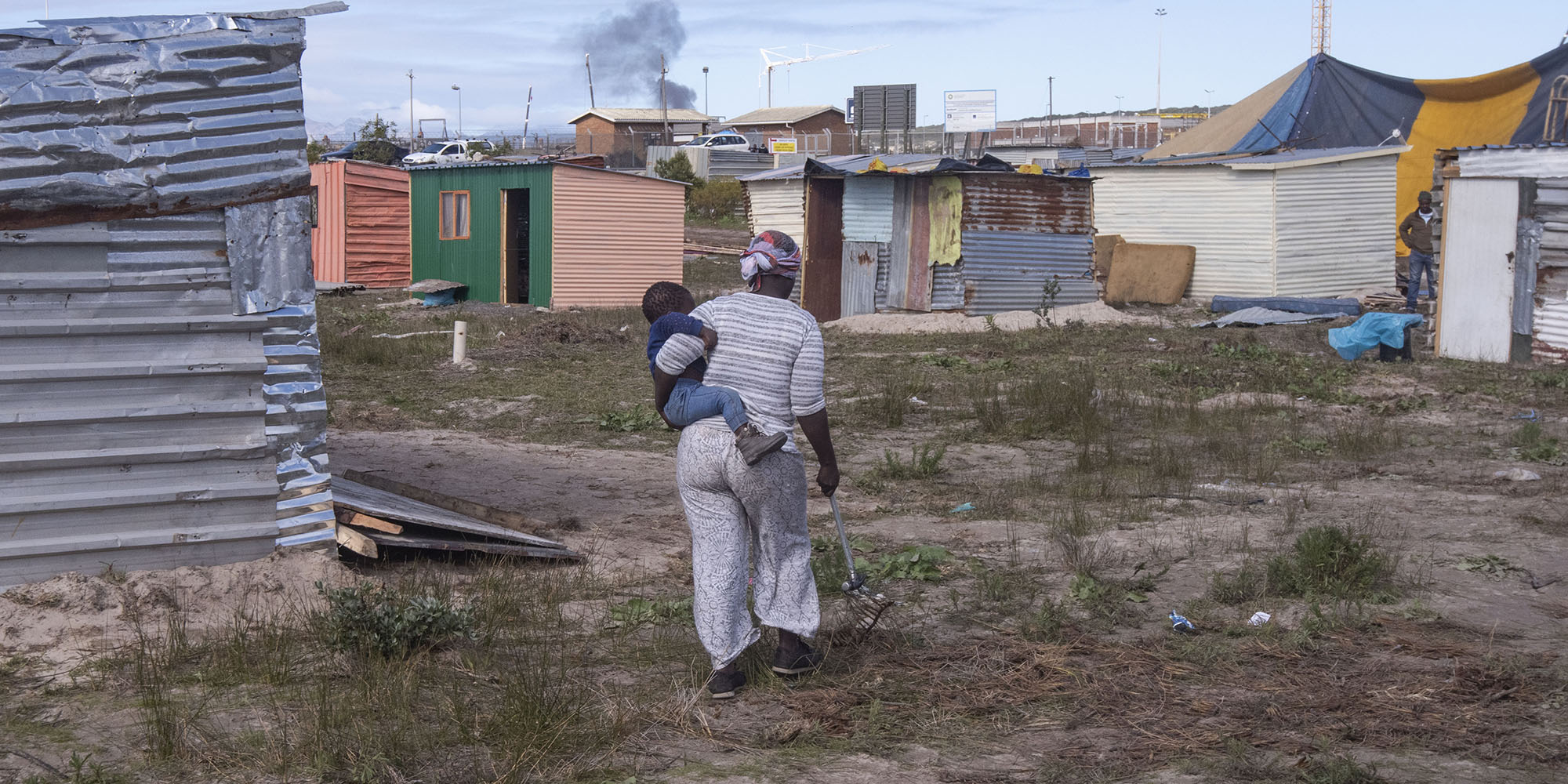
On 1 July 2020, a video of a naked man being dragged out of his shack in an informal settlement in Khayelitsha went viral on social media. The man concerned, Bulelani Qolani, was removed from his home by City of Cape Town officials who were members of the Anti-Land Invasion Unit (ALIU). They destroyed his home shortly afterwards.

The ALIU is a specialised unit tasked with deciding which structures should be demolished on land they claim has been invaded. This work is conducted without a court order and typically refers to homes in informal settlements, which means that it usually affects some of South Africa’s most vulnerable people.

The video caused an outcry. It reminded people of the brutal forced removals that took place during apartheid, and demands for the judicial oversight of evictions and demolitions during the national state of disaster were heard. The South African Human Rights Commission (SAHRC), a state institution that is mandated to promote respect for human rights, stepped forward in response.

Together with the Housing Assembly and Bulelani Qolani, the SAHRC brought a case against the City of Cape Town as well as the Minister of Human Settlements, the Minister of Co-operative Governance and Traditional Affairs, the National Commissioner of the South African Police, the Minister of Police and the Western Cape Provincial Commissioner of the SAPS.

Lockdown rights infringed – not an isolated incident

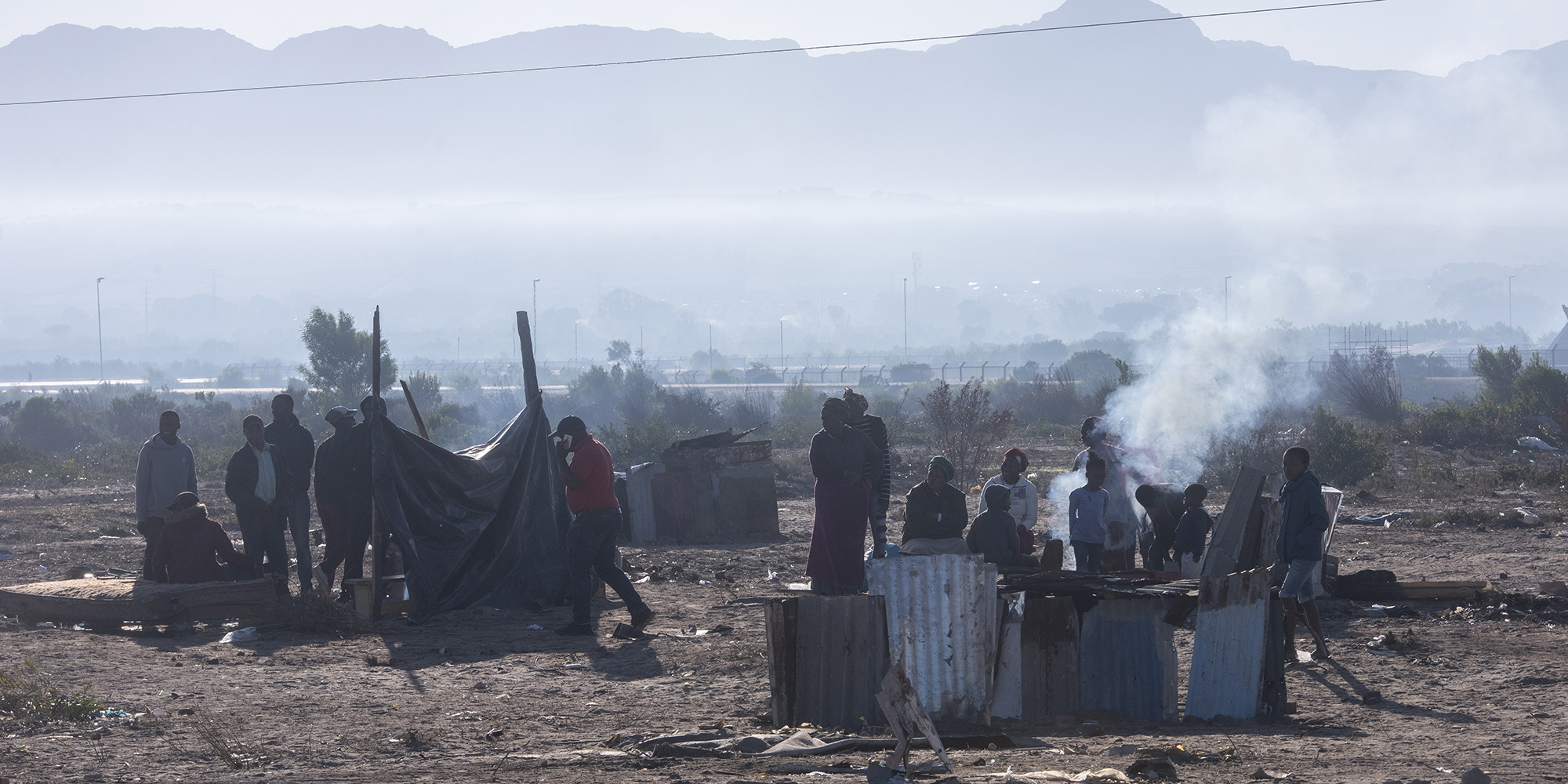
The incident that occurred in Khayelitsha on 1 July wasn’t the only one of its kind. In fact, there were several others that took place during alert levels 3 and 4, despite that fact that evictions were meant to be suspended until the last day of the alert level period.

Some of the demolitions and evictions that occurred were as follows:

  • On 9 to 11 April 2020 in Empolweni Informal Settlement in Makhaza, Khayelitsha, the ALIU demolished structures on land owned by the City. Urgent relief was given by the Western Cape High Court to a number of residents whose structures were demolished. On 17 April, the court granted an interim order, ordering the City to return building materials confiscated from Empolweni and authorising residents to re-erect and occupy structures there for as long as the lockdown continues.
  • On 15 May 2020 in Ocean View, Kommetjie, evictions and demolitions took place on land that is privately owned by the Ocean View Development Trust. The City denied that evictions were conducted at the time, and said that ALIU had acted within its mandate to demolish illegally erected structures provided that they were unoccupied.
  • On 29 June 2020 in Hangberg, Hout Bay, the SAHRC received a complaint alleging that City officials had demolished a structure. The Western Cape High Court declared the City’s conduct unlawful and unconstitutional and emphasised that home demolitions could not be carried out without a court order during alert levels 3 and 4.
  • On 13 July 2020 in Zwelethu, Mfuleni, structures on land owned by the Western Cape Nature Conservation Board in Mfuleni, which joins city-owned land, were demolished. Many of the area’s residents are desperately poor and unemployed and have been the subject of at least seven evictions carried out without a court order.

“Bleeding and in pain”

Of course, there was also the incident that received the most attention – the one that took place in Khayelitsha on 1 July. The official court papers refer to the affidavit that Bulelani Qolani gave, in which he states that while the law enforcement officers were approaching, he went inside his home and prepared to bathe: 

“He stood outside his dwelling naked and asked to be allowed to finish his bath. The law enforcement officers sprayed his neighbour with pepper spray and forcibly gained entry into Mr Qolani’s dwelling, carrying batons and guns. On entering his structure, they were already pushing up the roof to tear it apart. 

“He asked to be shown an eviction order and told them it was illegal to evict during the lockdown period. They ignored his requests, he said, handled him physically and violently, pepper sprayed him and forcefully removed him from his house, whilst still naked and in full view of residents. As Mr Qolani tried to re-enter his house, he states they shoved him to the ground and one official knelt on his back while another held him down to stop him moving.

“Eventually, after quite a struggle, Mr Qolani got back into his house and sat on his bed, his head bleeding and in pain. Whilst he was still inside, he states, the demolition was completed.”

A precedent-setting judgment

On 20 and 21 August 2020, the case between the SAHRC as the first applicant and the City of Cape Town as the first respondent was heard at the Western Cape High Court. And on 25 August 2020, judgment was delivered.

In their judgment, Judges Shehnaz Meer and Rosheni Allie declared that the City of Cape Town ALIU will not be allowed to evict people or demolish occupied or unoccupied structures without a court order while the country remains in a state of national disaster. This landmark ruling is binding in the Western Cape and may set a precedent for other provincial courts too.

What’s more, if any evictions or demolitions are conducted with a court order in place, these must be conducted “in a manner that is lawful and respects and upholds the dignity of the evicted persons”. City officials are expressly prohibited from using force, the judges decreed, and from destroying or confiscating any material on the property concerned.

SAPS members will now have to be present during evictions and demolitions to ensure they are done lawfully, in line with South Africa’s Constitution and “in accordance with the SAPS’ constitutional duty to protect the dignity of the persons evicted”. In addition, the City was interdicted and restrained from considering, adjudicating and awarding any bids or tenders received in response to a tender specifically focused on the demolition of illegal formal and informal structures in Cape Town.

The court ordered the City to return all building material and personal possessions taken by the ALIU since 1 May, and to pay R2,000 to the people identified by the Economic Freedom Fighters.

But there’s more to come. In October, additional hearings will be held to determine whether demolitions or evictions can take place without a court order once the state of national disaster has ended. It’s likely that an important conversation has begun.

Contact us

Simon Dippenaar & Associates, Inc. is a firm of specialist eviction lawyers, based in Cape Town and now operating in Johannesburg and Durban, helping both landlords and tenants with the eviction process. Contact one of our eviction attorneys on 086 099 5146 or sdippenaar@sdlaw.co.za if you need advice on the eviction process or if you are facing unlawful eviction.

Reprinted from sdlaw.co.za

Further reading:

Joburg pensioners sleep on street after being thrown out of flats

By | COVID 19, Eviction news, Eviction notice, Eviction orders, Homeless

(Photo: Bheki Simelane)

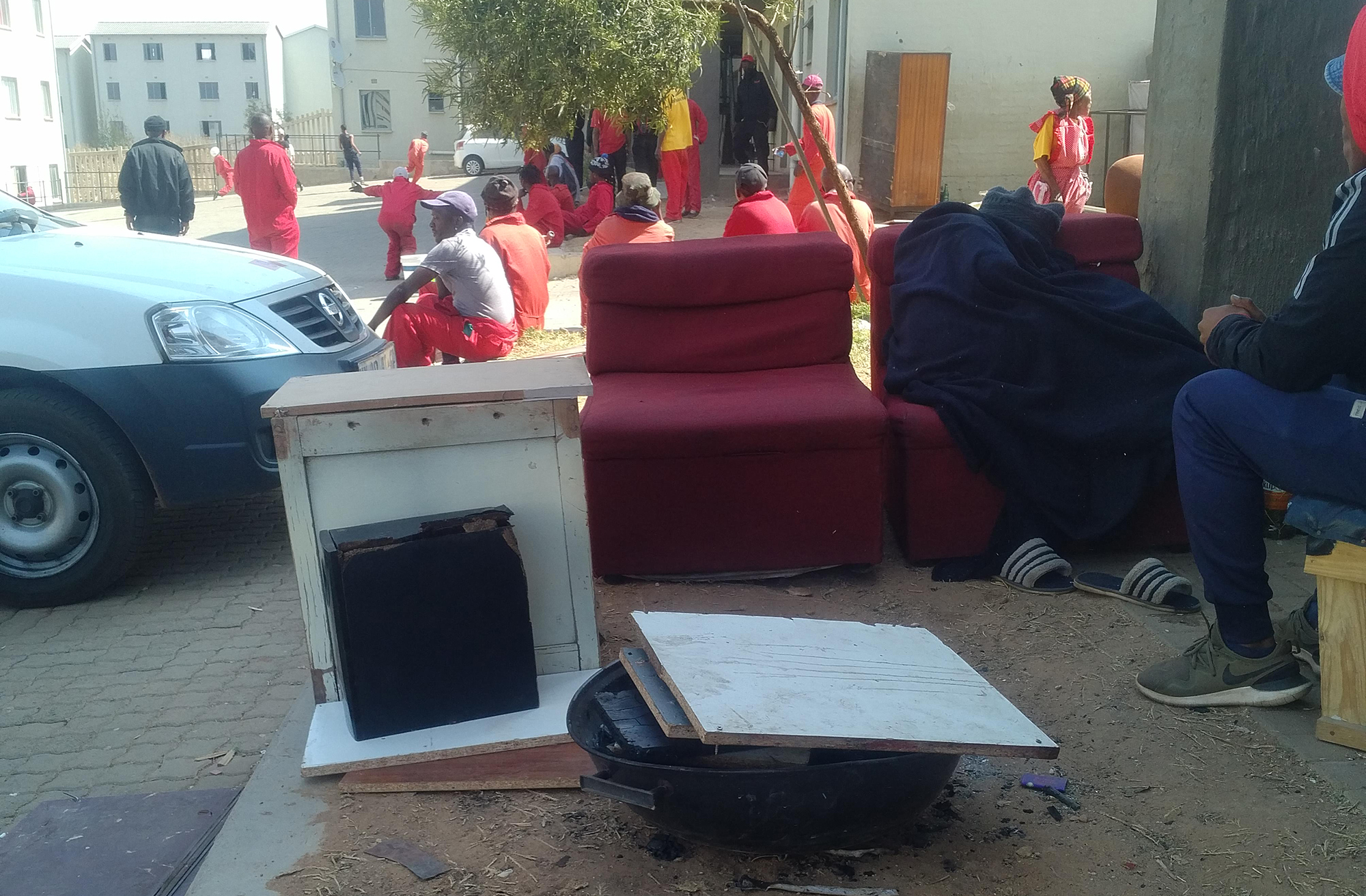
Edith Sihube, 73, points to her neighbours, where her belongings were being kept safe while she and her ailing husband looked after the rest. The Sihubes were evicted after illegally occupying a property since 2017.

A number of pensioners spent several nights out on the street last week after the City of Johannesburg ordered their eviction from a block of flats they had been illegally occupying since 2016.

Several elderly pensioners had to sleep on the street last week after they were evicted from the Fleurhof flats in Soweto they had called home for almost four years.

On Tuesday 25 August the sheriff along with the infamous Red Ants arrived at the flats and evicted about 100 people including pensioners and children. This, according to residents, was the second time the Red Ants had descended on the area in recent weeks, with an earlier eviction taking place on 12 August.

Illegal residents of Fleurhof flats, including many pensioners, spent at least one night on the street to protect what was left of their belongings after members of the Red Ants security evicted them. (Photo: Bheki Simelane)

“The operations were carried out by the sheriff of the court after the developer obtained the eviction order,” said City of Johannesburg spokesperson Nthatisi Modingoane.

“The first operation on 12 August had to be called off after there was a fatality, which is being investigated by the Independent Police Directorate (IPID). The second operation had to be undertaken to enforce the court order and make room for the units to be handed over to government for allocation of rightful beneficiaries.”

Members of the Red Ants Security play soccer on the property’s football pitch a day after they evicted illegal occupants. (Photo: Bheki Simelane)

According to the developer’s website, Fleurhof is a 440ha privately owned property in the process of being developed in partnership with the City of Johannesburg and is set to be one of the largest integrated housing developments in Gauteng. On completion, it will provide housing for an estimated 83,000 people.

Following the 12 August evictions, Human Settlements Minister Lindiwe Sisulu condemned illegal land invasions and said they were perpetrated by people who occupied the flats to strongarm the department to provide them with RDP houses on a preferential basis.

Edith Sihube, 73, told Daily Maverick that she had never had a problem since her arrival in the area in 2017. Sihube was in her house with her ailing husband and family when the Red Ants struck.

“They said nothing except to throw our belongings out,” she said.

Sihube’s ill husband was thrown out of bed, and pleas from Sihube to spare him were ignored. “They don’t want to hear anything, it’s impossible to reason with them,” she said.

Sihube said it was appalling that the very government that they have been voting for over the years was throwing them out on the street.

“When they want you to vote for them they take you to the polling stations, even when you are sick, but this is what we get in return.”

Tshidi Madisakwana, a Meadowlands Community Forum leader, who is also listed as the first respondent in the court order authorising the evictions, said the evictees had nowhere else to go as most had called the place home for almost four years, and some had children enrolled in schools in the area.

“This is a government that doesn’t care,” said Madisakwana.

Residents said they illegally occupied the flats in 2016, and that authorities had not removed them then because they wanted their votes.

“Now they feel it’s the ideal moment, one they think won’t influence our voting patterns. This government has no shame,” said Madisakwana.

Several of the people Daily Maverick spoke to said they were in possession of government C-forms. These forms are an indication that the person had applied for government housing and is on a waiting list. But many don’t believe such a list actually exists.

Said Madisakwana: “Many of those people are from Meadowlands. They have been patiently waiting for houses, but told they are not next in line despite being in possession of C-forms and some having registered in 1996.

“Now that they have thrown the people out, where do they expect them to go, because they have nowhere else to go?” asked Madisakwana.

Many residents stayed up the whole night looking after what was left of their belongings, claiming that several items had been stolen during their eviction.

Shadrack Moabi, 76, who suffers from malignant hypertension, said he arrived in the area in 2017 and had never had a problem until he was thrown out.

“They said nothing. They just tossed out my belongings,” said Moabi.

Moabi’s bed and TV were missing after the eviction, he said.

“Authorities promised us houses; instead, the little that we have is being stolen from us. How would that make you feel?” asked Moabi.

Another eviction victim, 73-year-old Francina Tabola, who also arrived in the area in 2017, said she no longer cared about voting for anyone after supporting the ANC all her life.

“What do I have to show for that, except for a meagre grant? My wish was to die in my own house.”

Tabola said a number of her possessions were stolen during the eviction, including blankets, a phone, a TV and an electric kettle.

“Can this government please come and help us. Why are my things missing?” she asked. When Tabola, who suffers from high blood pressure, spoke to Daily Maverick she had not eaten in 24 hours.

Asked why the flats had remained empty for so long, the City’s Modingoane said the site was still under development and had not yet been handed over to the government for allocation.

Asked where the people evicted should go, Modingoane said, “A court order does not put conditions on the developer. Illegal occupation is a crime and should not be seen as means to be rewarded.”

Modingoane said the eviction did not flout lockdown regulations as “different levels of lockdown come with a different set of rules. The court… take these regulations into account. A competent court of law arrived at a decision to grant an eviction order which got enforced by the sheriff of the court.”

Reprinted from Daily Maverick

Some links added by SD Law

Simon Dippenaar & Associates, Inc. is a firm of specialist eviction lawyers, based in Cape Town and now operating in Johannesburg and Durban, helping both landlords and tenants with the eviction process. Contact one of our attorneys on 086 099 5146 or sdippenaar@sdlaw.co.za if you need advice on the eviction process or if you are facing unlawful eviction.

Further Reading:

Eviction, extortion and upheaval: A mother of five’s search for a place to call home in Khayelitsha

By | COVID 19, Eviction news, Eviction notice, Eviction orders, Evictions, Homeless

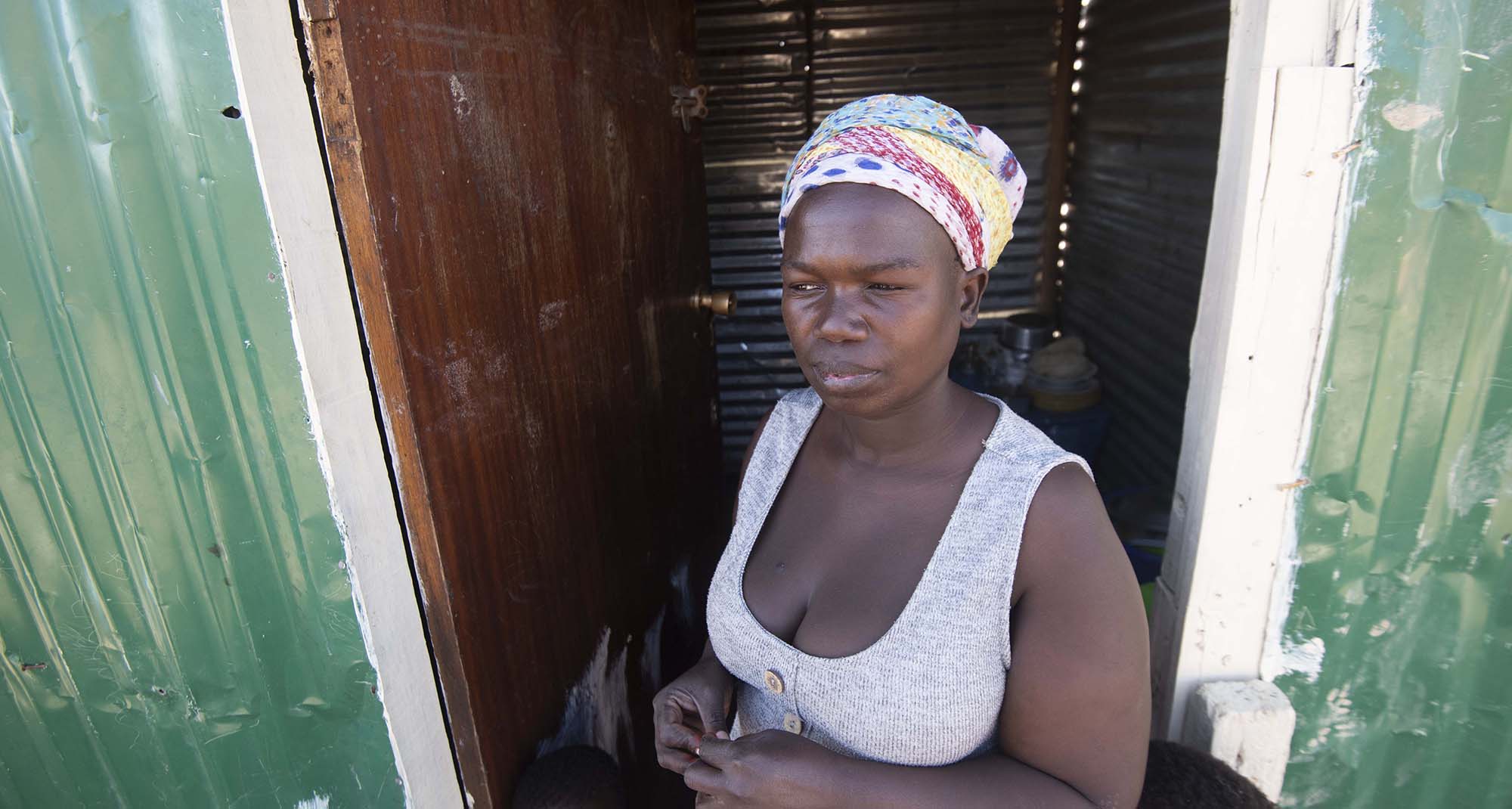
Nyameka Mantambo at the tent in eThembeni given to her by Gift of the Givers after her shack was demolished in Empolweni, Cape Town, South Africa. (Photo: Brenton Geach) Less

Nyameka Mantambo, a mother of five, was evicted after being unable to pay rent in Khayelitsha during the Covid-19 pandemic. She moved to Empolweni where, after shacks were destroyed and obtaining permission to rebuild, she was forced off the land after community members tried to extort R1,000 to ‘allow’ her to erect a shelter. The land belongs to the City of Cape Town.

Nyameka Mantambo was evicted from the backyard she was renting after her income drastically decreased during Covid-19 lockdown. (Photo: Brenton Geach)

For five years, Nyameka Mantambo and her five children were backyard dwellers in Town 2 in Khayelitsha. When the Covid-19 lockdown was enforced in late March, she was unable to pay her monthly R500 rent.

“I asked the landlord to allow me not to pay rent for two months, my landlord didn’t agree and I had to look for another place to stay,” Mantambo told Daily Maverick.

Mantambo is from the Eastern Cape, and moved to the Western Cape in 2000 in search of a job. She first stayed in Lower Crossroads where she was a backyard dweller.

Mantambo sells chicken feet to support her children aged two, five, nine, 11 and 15. With the drastic decrease in her income, Mantambo relied on child grants to feed her family.

Despite the moratorium on evictions under lockdown regulations, landlords are still evicting tenants who can’t pay rent.

The housing crisis has led to mass disruptions, protests and exploitation of vulnerable communities. An estimated 600,000 people are on the housing waiting list in the Western Cape alone (See sidebar below).

Empolweni, Cape Town, South Africa. Photo: Brenton Geach)
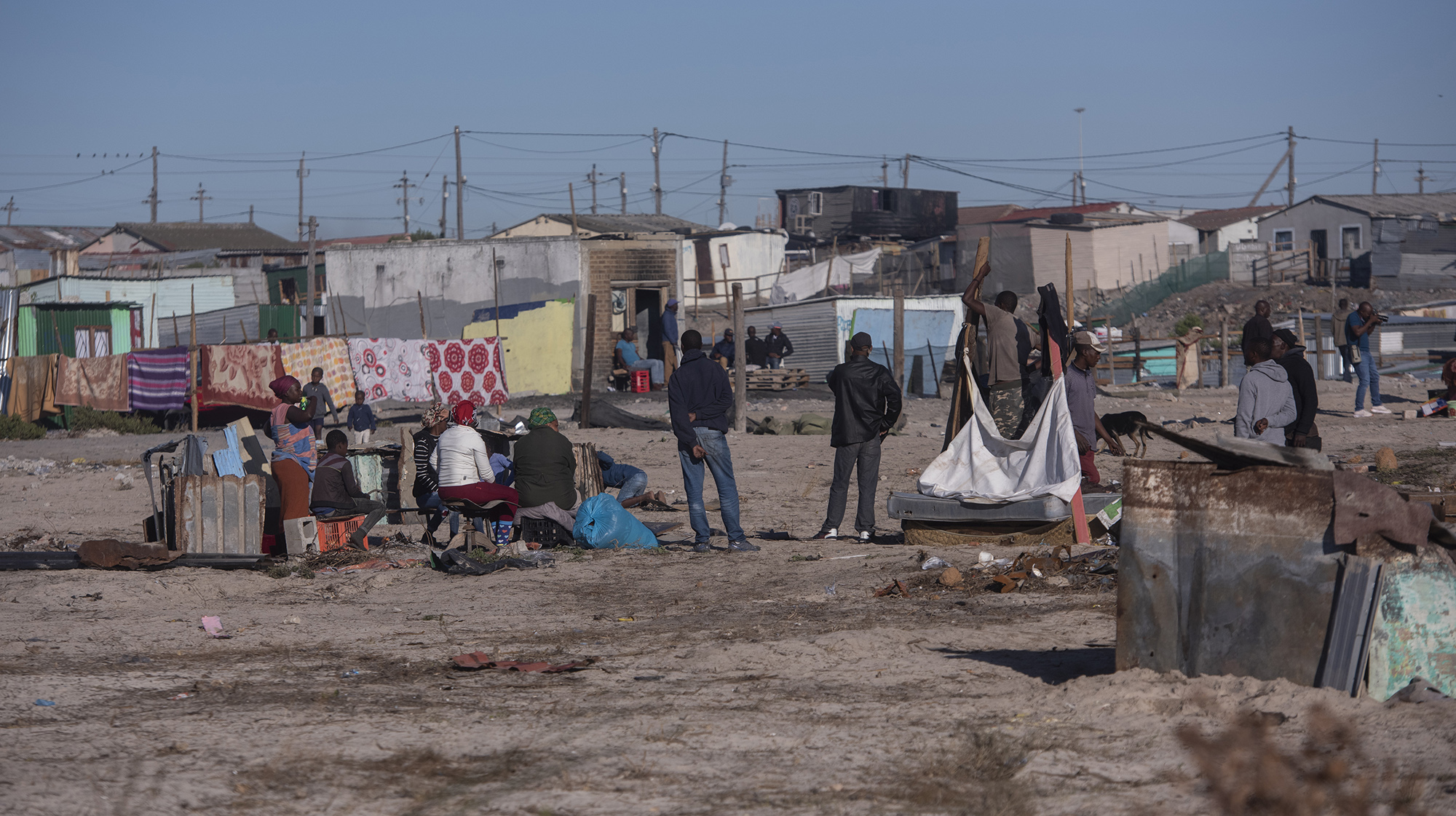
Lwandile Mantambo sits outside a tiny shack dwelling late in April, 2020, after law enforcement officials broke down structures in Empolweni, Khayelitsha. (Photo: Brenton Geach).

After she was evicted, Mantambo built a shack at Empolweni, on City-owned land. In April, when shacks were demolished there, she and the other residents were left homeless.

Empolweni residents took the City of Cape Town to court over the demolitions. Judge Bryan Hack ruled in the residents’ favour and ordered the City to allow 130 people to return to Empolweni and to give back their building materials. Where material had been damaged, the City had to ensure that there was adequate material for all 49 homes to be rebuilt.

But Mantambo never received building materials that were distributed. “People were just grabbing [the building material], it wasn’t done in an orderly manner so I was unable to get building material.”

Mantambo was asked by “some community members” in Empolweni to ‘pay’ for a piece of land on which to rebuild her shack. Various community members asked her to pay from R500 to R1,000 to “give” her a piece of land.

Because Mantambo didn’t have any building materials she and her children stayed in a tent donated by Gift of the Givers in Empolweni. But, she was constantly harassed for money to stay on the land, so she moved after a month. “I couldn’t do anything, that’s why I left [Empolweni],” said Mantambo. In May Mantambo and her five children moved to the adjacent area of eThembeni, which is also City-owned land.

In early July, the Anti-Land Invasion Unit dragged Bulelani Qolani out of his shack while he was naked in eThembeni.

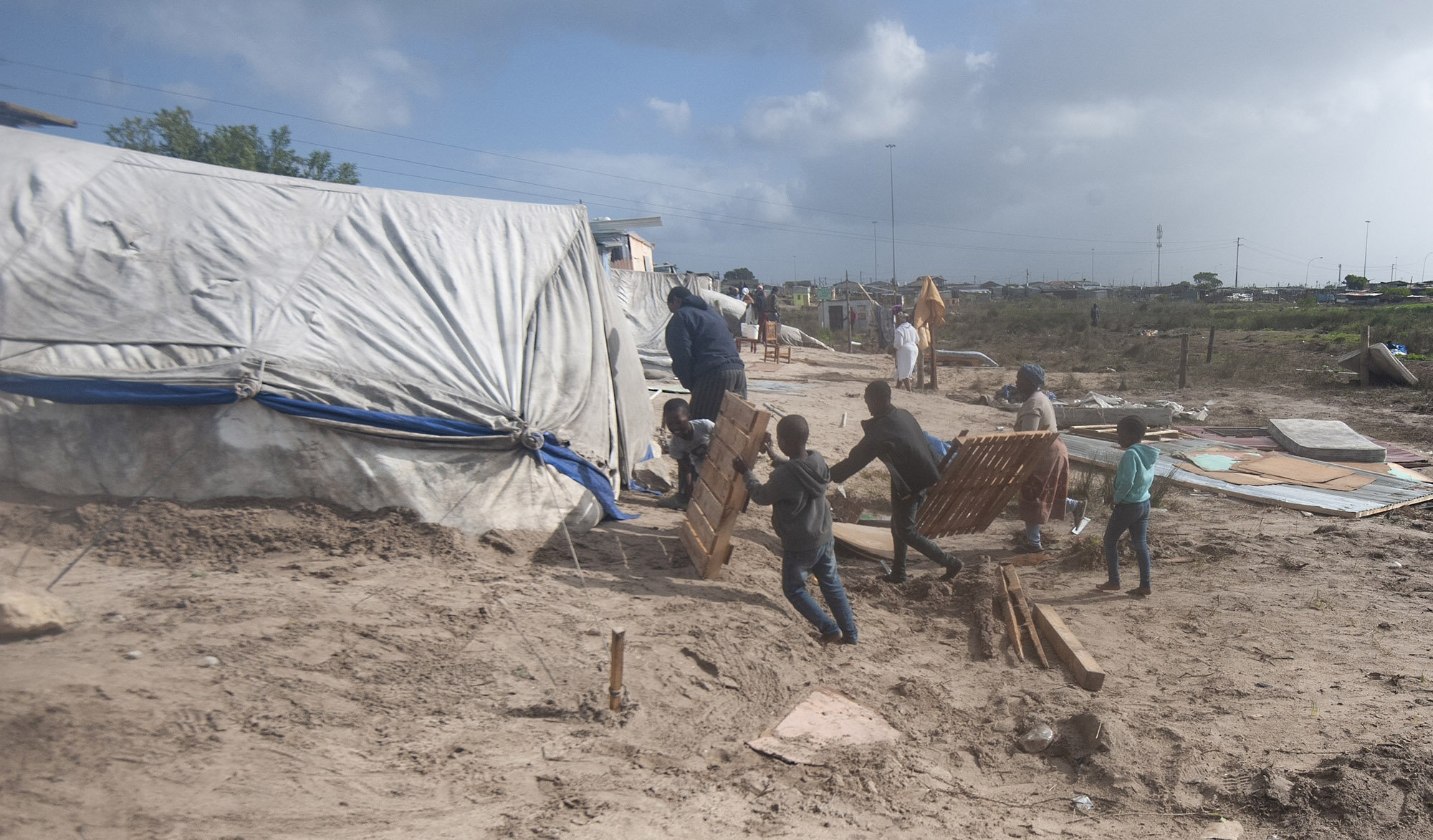
Nyameka Mantambo, with four of her five children inside the tent given to her by Gift of the Givers, after their shack was demolished in Empolweni, Cape Town, South Africa. (Photo: Brenton Geach)

While Mantambo witnessed the demolition of structures that day, she was spared because she was staying in a tent.

The tent was their home until a woman in eThembeni offered her a shack. “A community leader [in eThembeni] had a shack here that belonged to her brother. Now, I’ve bought the shack,” said Mantambo. The shack costs R2,500 and Mantambo is paying it off monthly.

The tent given to Nyameka Mantambo by Gift of the Givers after her shack was demolished in Empolweni, Cape Town, South Africa. (Photo: Brenton Geach)

After months of disruption and relocation, Mantambo is feeling more settled and safe in eThembeni. She says no one has asked her for any money; in fact, the opposite has happened, “The people here [in eThembeni] have helped me a lot, even when I don’t have enough for food or something, they help me,” said Mantambo.

Lwandile Mantambo outside the family’s tent in eThembeni, Cape Town, South Africa. (Photo: Brenton Geach)
Nyameka Mantambo walks around eThembeni, where her shack is currently located. (Photo: Brenton Geach)

Desperation and risk of extortion

Across the country, the need for housing far outweighs the supply of housing. In a Cape Talk interview a month ago, Tertius Simmers, the MEC for Human Settlements in the Western Cape, said there are almost 600,000 people on the housing waiting list.

The provincial average waiting time for a house is 15 years. In the City of Cape Town the average waiting period is 15 to 17 years, said Simmers.

Because people urgently need housing, occupying land is seen as one of the ways to immediately address their housing needs.

Although paying for a plot on occupied land is illegal it is common in many informal settlements, said Adi Kumar, the director of the Development Action Group, an NGO that advocates for affordable housing, land and tenure security.

“This isn’t a new phenomenon, but prevalent even in informal settlements that are over 20 years old,” said Kumar.

These are illegal transactions, said Malusi Booi, mayoral committee member for human settlements. There are some people who see the land occupations as a means to enrich themselves illegally, said Booi.

Empolweni, Cape Town, South Africa. (Photo: Brenton Geach)

“There are many recourses that can be taken,” Kumar told Daily Maverick. “Firstly to report this to SAPS and law enforcement around the ‘main occupier’ and charging rent. Secondly, addressing this issue with the ward councillors, so that it can be recorded with city council.”

Land occupiers forcing other land occupiers to pay for occupied land falls under extortion. “Extortion takes place when someone else induces pressure on another person with the intention of getting some sort of benefit. The pressure can be anything, as long as that pressure can create a sense of fear in the mind of the person who’s being subjected to the extortion,” said Legal Aid lawyer, Kabelo Manyoga.

Extortion is rife in land occupations. Generally, everyone living in the informal settlements knows about it, said Manyoga.

However, not many people report it to the police “which is often because people aren’t informed about their rights”, Manyoga told Daily Maverick.

Another issue is that “even when people are urged to open a case, they are not willing to”, said Brenda Hansen, a DA ward councillor in Kraaifontein, where there have recently been land occupations.

“Besides opening criminal charges, the extorted person can go to the civil court and apply for an interdict for those people to stop harassing them and stop asking them for money because they don’t own that land,” said Manyoga.

Reprinted from Daily Maverick by Karabo Mafolo

Simon Dippenaar & Associates, Inc. is a firm of specialist eviction lawyers, based in Cape Town and now operating in Johannesburg and Durban, helping both landlords and tenants with the eviction process. Contact one of our attorneys on 086 099 5146 or sdippenaar@sdlaw.co.za if you need advice on the eviction process or if you are facing unlawful eviction.

Further Reading: